
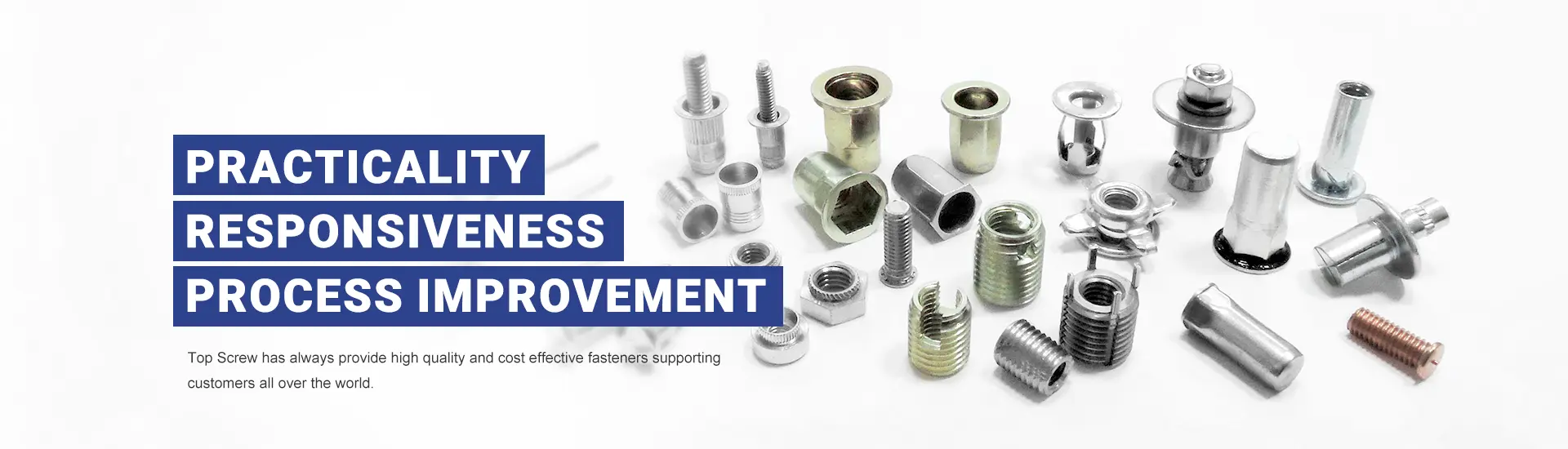
The One-Sided Wonder: How Rivet Nuts Revolutionize Thin-Material Fastening

In modern manufacturing and metalworking, engineers often face a tough challenge: how to create a strong, reliable threaded thread in materials too thin to tap, such as sheet metal, plastics, or thin-walled tubes? While welding nuts is slow and ruins surface finishes, the rivet nut (also known as a blind nut or rivnut) offers the ultimate, elegant solution.
The beauty of the rivet nut lies in its "blind" installation capability.
This means it can be installed entirely from only one side of the workpiece.
A rivet nut is placed into a pre-drilled hole, and a specialized tool pulls the threaded mandrel, causing the unthreaded sleeve to collapse and bulge outward.
This tightly clamps the sheet metal from both sides, creating a permanent, high-torque internal thread.
This innovative component brings several distinct advantages to the table:
No Thermal Damage: Unlike welding, it requires no heat, preserving pre-painted or coated surfaces.
Single-Sided Access: Perfect for closed tubes, hollow profiles, or structures where the backside is inaccessible.
Versatility: Works seamlessly across diverse materials, including aluminum, steel, plastics, and composites.
Rivet nuts are staples in high-stakes manufacturing. In the automotive industry, they secure dashboards and chassis components.
In aerospace and rail transit, they allow for the quick assembly of lightweight interior panels. Even in daily life, they are used to mount water bottle cages on bicycle frames and assemble metal furniture.
By turning a complex fastening problem into a one-second operation, rivet nuts have transformed assembly lines worldwide.
They bridge the gap between lightweight design and structural strength, proving that sometimes the smallest components make the biggest impact in modern engineering.